
Keeping Business Communications Running During Disruptions
calendar_today
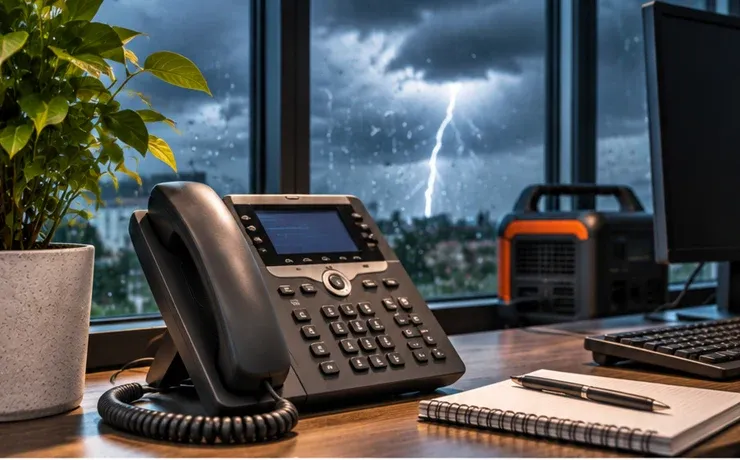
A power outage can close an office in minutes, but it does not necessarily stop customers from calling. A supplier may need to confirm a delivery, a customer may be waiting for an urgent update, or an employee may need instructions about a change in operations. When the usual phone system is unavailable, even a relatively short interruption can leave people unsure of what to do next.
Business continuity planning often concentrates on restoring computers, protecting records and reopening facilities. Those priorities are important, but businesses also need a way to communicate while recovery is underway. A practical phone coverage plan gives customers a dependable point of contact without requiring employees to improvise under pressure.
Identify what must remain available
Start by separating essential communications from activities that can wait. A distribution company may need to receive calls about delayed shipments, while a service contractor may need to coordinate urgent appointments. An organization with several departments might prioritize calls involving safety, existing commitments or time-sensitive operational decisions.
Ask each department which calls it would still need to receive if the office were closed for an entire business day. Document the information callers should provide, who can make decisions and what an operator should say when normal service is unavailable. This exercise often reveals responsibilities that were never formally assigned because employees handled them informally during ordinary operations.
Establish an independent answering path
A backup phone system is only useful if it remains accessible when the primary system fails. Forwarding calls to another extension in the same building may not help during a local power or network outage. Likewise, sending every call to a manager's mobile phone can create a bottleneck when several people need assistance simultaneously.
An external 24/7 call center solution can provide an alternative answering destination, depending on how the business and its telecommunications provider configure routing. Confirm whether forwarding can be activated remotely and what happens if the primary telephone carrier experiences a disruption. These details should be settled before an incident, not discovered during one.
Create instructions for different disruptions
Not every interruption requires the same response. A planned office closure may only require a temporary greeting and message collection. A regional storm could require updates about canceled appointments, while a technology failure might prevent staff from accessing customer records even though they can still speak with callers.
Develop a short set of instructions for each likely scenario. Include approved language, the types of calls that require immediate attention and the contact information for people authorized to respond. Avoid asking operators to make promises about restoration times unless management has confirmed them.
It is also helpful to assign someone responsibility for updating those instructions. Information that was accurate at the beginning of an outage may become misleading several hours later. A clear approval process keeps messages consistent without requiring every department to issue its own guidance.
Build an escalation process that works under pressure
An escalation plan should identify a primary contact, an alternate contact and the next action when neither responds. The appropriate response window will depend on the nature of the call and the organization's obligations. A routine billing question and an urgent operational issue should not follow identical procedures.
Businesses with complex response requirements can explore emergency response answering services as part of their continuity planning. The important distinction is between receiving a report and resolving the underlying issue. Operators need clear instructions about their role, including when a caller should contact public emergency services directly.
Test the plan before it is needed
A written procedure can appear complete until someone attempts to use it. Arrange a controlled exercise in which the usual office line is temporarily unavailable and test callers use the backup answering path. Include a routine inquiry, an urgent message and a situation where the first designated contact cannot be reached.
Review whether the correct greeting was used, whether messages contained enough information and whether escalation reached the intended recipient. Record any delays or confusion, then update the procedure and repeat the relevant portion of the exercise. Coordinate tests with staff and providers so real customer calls are not inadvertently disrupted.
Plan the return to normal operations
Restoring the phone system is not the same as clearing the work accumulated during an outage. Customers may have left messages, employees may have received duplicate notifications and some requests may still require follow-up. Assign responsibility for reviewing outstanding items before switching fully back to normal coverage.
Keep a record of when temporary routing began and ended, which requests were completed and which remain open. This makes it easier to reconcile messages and identify customers who need an update. A brief review afterward can also reveal weaknesses in the continuity plan that were not apparent during testing.
The strongest communication plans are not necessarily the most complicated. They establish a reliable alternative, give people clear responsibilities and account for the period between an interruption and full recovery. By treating telephone coverage as an essential part of business continuity, organizations can remain accessible even when their usual workplace is not.